ICU · RF MOTION SENSING · TRL-4 LABORATORY BREADBOARD
YHDA detects human motion from Channel State Information on commodity Wi-Fi hardware. Validated today in controlled single-room laboratory conditions at TRL-4.
PROJECT "ICU"

VALIDATION EVIDENCE
Read the validation methodology
Narrow, controlled single-room laboratory validation
Clean-core grouped evaluation
Clean live walking/motion repetitions · counted median 4.643 s
RF-health soak checks passed
SETUP
Intel 5300 receiver, TP-Link Archer A7 access point. 5 GHz, channel 36, 20 MHz HT20, GB regulatory domain.
CLEAN CORE DATASET
5 adult subjects, 45 captures, 2,527 windows. Activity leave-one-subject-out accuracy 77.96%. Walking recall 0.95, F1 0.93.
PRODUCTION DATASET
72 captures, 4,094 windows. Subject leave-one-subject-out accuracy 70.79%.
MOTION STATE
True positives 7, false negatives 0, false positives 1, true negatives 16.
LIVE LATENCY
7 clean detections under 5 seconds from 10 attempts. Median 4.643 seconds.
RELIABILITY
60-minute soak, 61 of 61 RF-health checks passed. Cold-start passed. Interruption and recovery passed.
These figures come from a controlled single-room laboratory setup with a dedicated access point. They do not describe performance on arbitrary Wi-Fi networks, in other rooms, or with untrained subjects.

Validated today
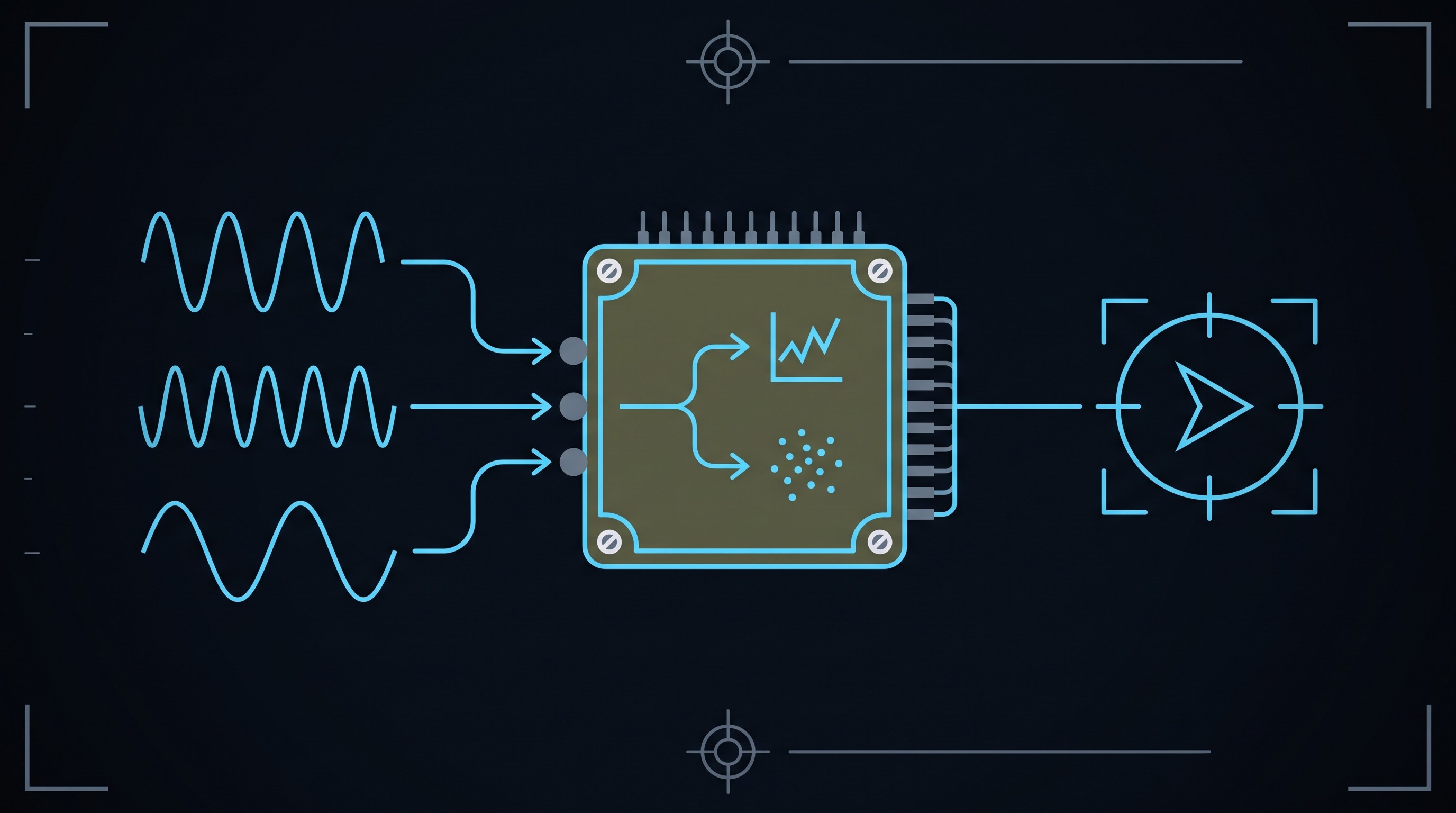
We detect human motion from Channel State Information on a guarded 5 GHz, 20 MHz Wi-Fi link. Radio sensing does not use an optical path, so the method needs no illumination. No cameras, no images, no recordings.
TRL-4 laboratory
Privacy by design

Validated today
A Random Forest activity model runs on windowed CSI features. Walking is the strongest class, with recall 0.95 and F1 0.93 on the clean core dataset. Posture and zone classification are not reliable across days, and we do not present them as capabilities.
Motion state
Walking F1 0.93
Research roadmap
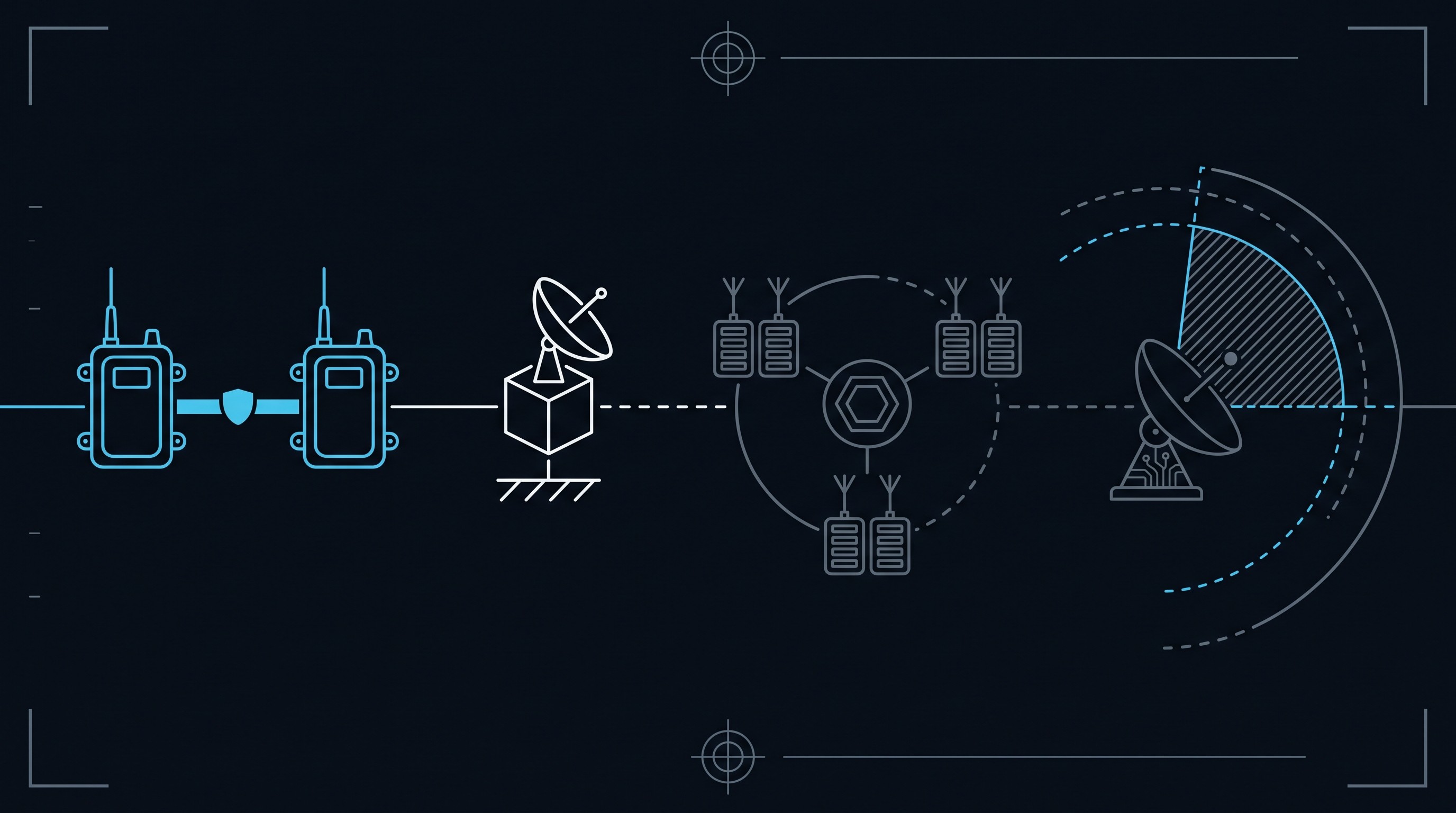
We prove the science on low-cost commodity hardware now, with a research roadmap toward supported RF nodes, multi-link geometry, and UWB or radar sensing where validated. None of that roadmap is built yet.
TRL-4 today
UWB research roadmap
Validated today
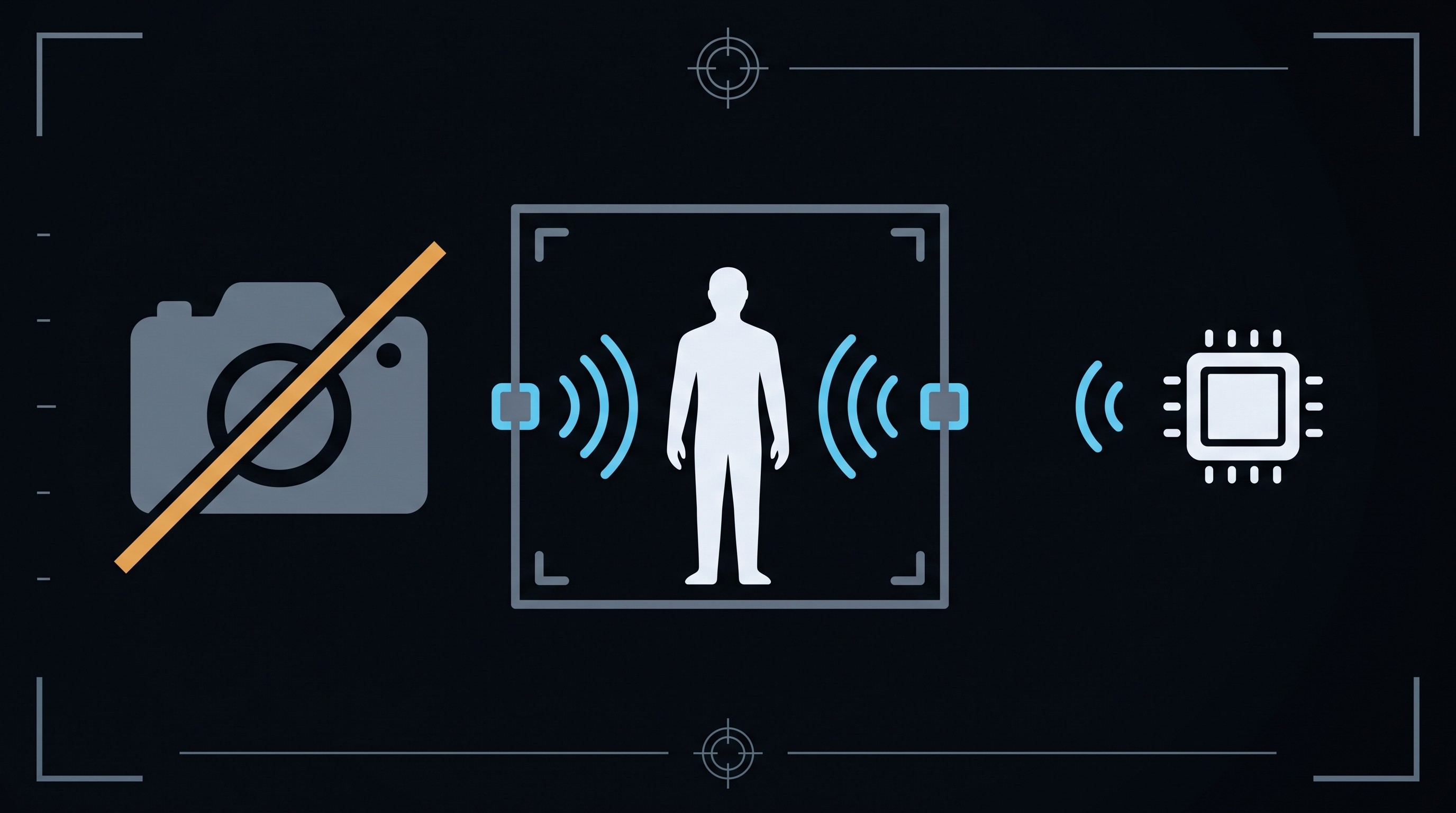
No cameras, no images, no recordings. YHDA detects motion from radio signals alone, so there is no visual record to store, leak or misuse.
No images
No recordings


Force protection
An additional camera-free motion cue for protected rooms, temporary operating locations and restricted facilities.
Critical infrastructure
Potential motion awareness for energy, communications, industrial and protected technical sites.
Defence logistics
Future non-visual monitoring around controlled storage, equipment rooms and sensitive logistics areas.
Research into RF motion cues for dark or visually obstructed indoor environments.
Future evaluation of whether RF sensing can contribute useful motion information in low-visibility structures.
Potential sensing for unmanned or bandwidth-constrained facilities where conventional surveillance may be unsuitable.
DEVELOPMENT STATUS
From laboratory breadboard to partner trial
ICU is currently a TRL-4 laboratory breadboard for narrow, controlled-room strong-motion detection. The next funded phase will migrate the pipeline to supported RF hardware, expand validation, add a secure event interface and produce a portable hard prototype for partner-defined trials.
COMPLETE
TRL-4 Laboratory Breadboard
Supported RF Nodes
Multi-Link Validation
Secure Event API
Hard Prototype
Partner Trial
YHDA Limited is a UK deep-technology company developing privacy-preserving RF sensing and active-perception systems for defence and dual-use environments.
YHDA Limited
Company No. 17282741
London, United Kingdom

We are seeking RF hardware partners, technical advisers and controlled evaluation environments across defence, emergency response and critical infrastructure.